
For new parents, the endless stream of well-baby checkups in the first two years can feel like an absolute whirlwind, but each one serves a specific set of purposes in monitoring your child’s growth. Most of these appointments are held with your family physician in Etobicoke, rather than a specialist, as Ontario’s healthcare system prioritizes continuous pediatric care via general family practice. This guide will outline what to expect at each well-baby visit, what your doctor is looking for, and when a visit to the walk-in clinic in Etobicoke can help in the interim.
Key Takeaways
Most well-baby checkups follow a standard Canadian schedule, using the Rourke Baby Record as a guide, from the child’s first week to their fifth year.
Each examination will include growth and developmental assessments, guidance on feeding and safety, and immunization shots.
Seeing the same family physician in Etobicoke is crucial to monitoring your child’s growth over time.
These are frequent in the first year, with later ones being more spaced out as the child grows up.
You can and should use a walk-in clinic in Etobicoke for unexpected illnesses between well-baby checkups, but these are not a substitute for the continuous schedule itself.
Why Well-Baby Checkups Are So Important For the Long Term Health of Your Child
Well-baby checkups are about catching little things before they become big problems. Most of the Canadian medical establishment uses the Rourke Baby Record as a guide through the first five years of a child’s life. Its value is in having a standardized approach to growth, developmental, and preventative medicine. By using the same format and guidelines for each visit, you ensure that nothing slips through the cracks.
Usually, it’s a family physician in Etobicoke who performs these examinations rather than a children’s specialist, as most healthy infants and toddlers are expected to thrive on the general family practice level. Specialized pediatric care remains an option for complicated situations, but keeping well-baby appointments with the same doctor allows for a continuous view of a child’s medical history, growth patterns, and immunization records.
Continuity is key – it’s easy to focus on the numbers at your child’s regular checkup, but a pattern often emerges as the months go by, speaking to the changes or consistency in their growth. It’s the same with developmental signs and symptoms – context matters greatly when determining if they signal an issue or not. Seeing the same healthcare professional enables them to understand your child’s individual case better.
The Well-Baby Appointment Schedule And What You Can Expect At Each One
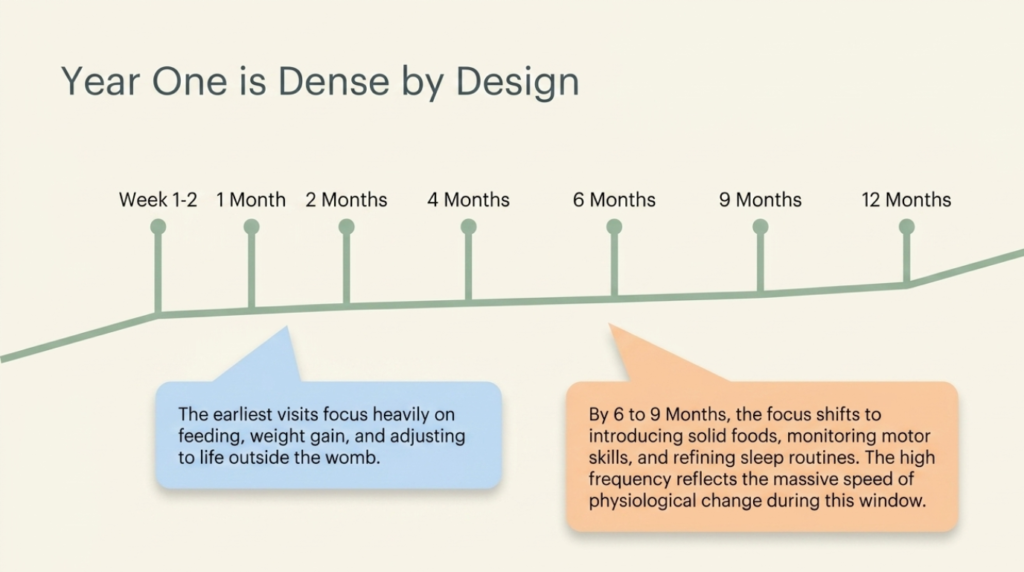
Most families in Ontario are already seeing their regular doctor within the first week or two of their infant’s life, with frequent checkups following at about a month, two months, and four months. These early examinations tend to be the most frequent, as the first year is when the most dramatic changes occur to a child’s body. Most often, they will discuss feeding, the introduction of other fluids and food items, and the child’s ability to cope with being outside the womb.
At six months, nine months, and onward towards the child’s first birthday, the talks shift towards the introduction of solid food, sitting, reaching, sleeping, and other developments. The first year tends to be the most talked about and remembered by many families, as children start walking, talking, and interacting with the world more actively – and many parents are likely to bring their child to the first dentist around this time.
After that, visits are less frequent – once or twice a year – and they mainly concern language development, toilet training readiness, and behavioral patterns. Having the same family physician in Etobicoke for these later appointments becomes even more critical, as they will be able to recognize a change in patterns for a growing child who already has a medical history with them.
What Your Family Doctor Looks For at Each Checkup
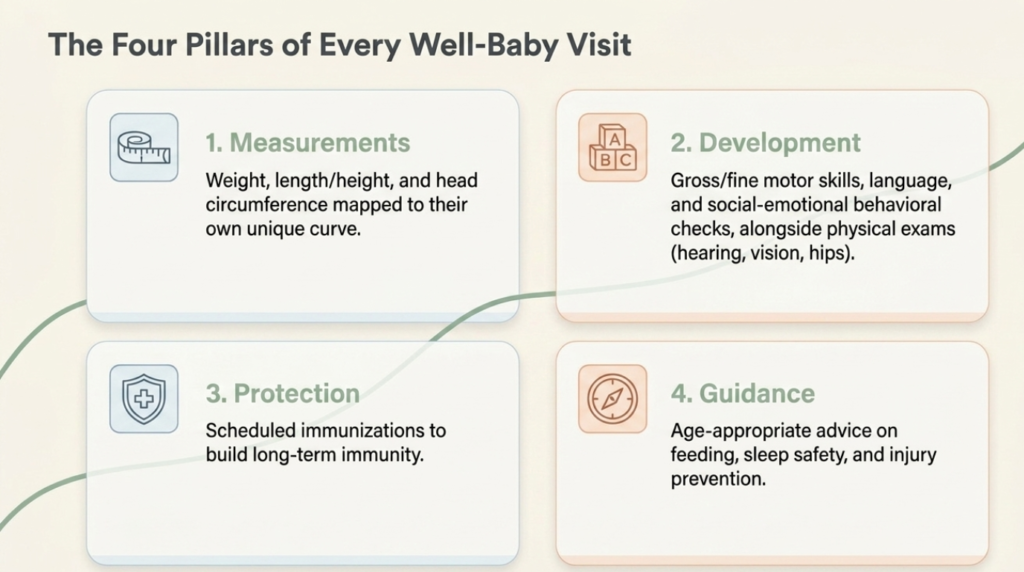
Each well-baby examination will begin with taking the child’s stats, including their weight, length or height, and head circumference, plotting them on a growth chart. A doctor will be concerned about the trends that emerge on these charts, as a single measurement is rarely indicative of a problem on its own, as most healthy children will fall within the range of possible sizes.
A developmental assessment is also part of each regular checkup, where a doctor will look at gross motor skills, fine motor skills, speech, and social behaviors for their age. Their questions and observations will vary depending on how old the child is – most often, you can expect them to talk about your baby’s ability to hold their head up, sit, reach, babble, or say words for the first time. A physical examination, including a hearing test and vision screening, is also performed, with the hip exam being especially relevant for the first few years.
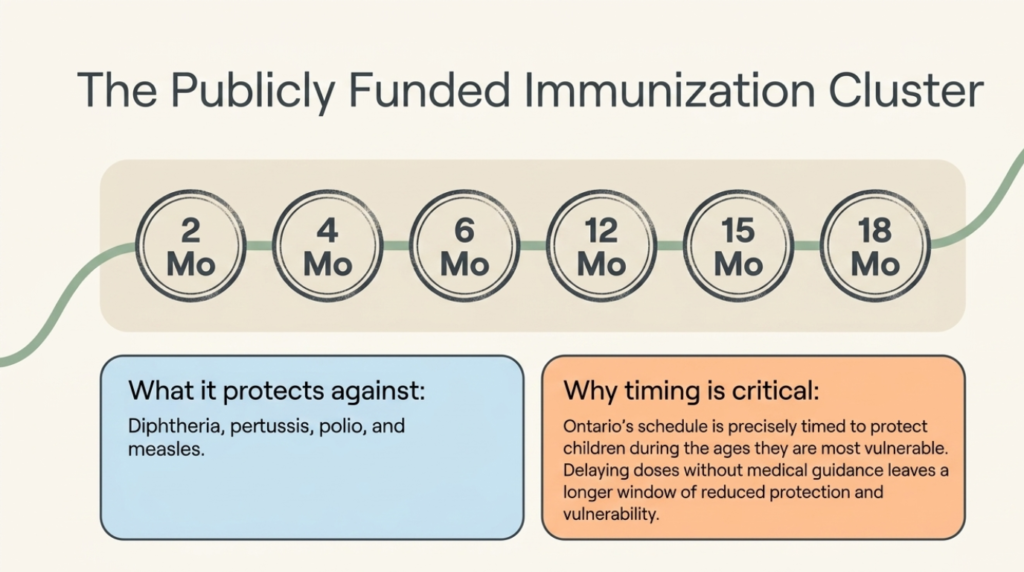
Several of these regular well-baby appointments coincide with immunization shots, which most often happen at two, four, six, twelve, fifteen, and eighteen months of age in Ontario. These are designed to protect against diphtheria, pertussis, polio, and measles and follow a public health schedule. At each examination, a doctor will also give you feeding and safety advice relevant to your child’s current stage and needs, as these change dramatically from infancy to kindergarten.
When To Use a Walk-In Clinic In Etobicoke Between Scheduled Well-Baby Checkups
Sick visits are an unavoidable part of having a young child in the family, as illnesses tend to occur more frequently between the well-baby appointments. If a fever, infection, rash, or another condition cannot wait until the next scheduled day, a walk-in clinic in Etobicoke can be a good alternative to a primary care physician’s office for a same-day pediatric examination. You might also opt for a walk-in clinic if your regular doctor becomes unavailable or you are unable to reschedule the appointment with them for another day. Always remember to bring your health card and immunization records, as a walk-in clinic will not have access to your child’s medical history.
What your doctor looks for at these examinations depends on the child’s age – for most families, the first year is the busiest and the most frequent part of their regular checkup schedule. It’s always a good idea to have a child seen by a primary care physician for these appointments, so both you and your doctor can get the most value out of each examination. As your toddler grows, they will require less frequent but more involved checkups to monitor their development in the long term.
When it comes to the walk-in clinics in Etobicoke, it’s vital to remember that they can handle unexpected illnesses but are not an option for continuous care. For growth monitoring, regular developmental assessments, and immunization series that follow a strict schedule, a family physician is still the only viable option. Most walk-in clinics are registered with the Ontario healthcare system and can be trusted to handle minor concerns, but they are not designed to serve as a regular pediatric substitute for the well-baby checkups.
Families that still need to find a regular family doctor for their children can rely on Health Care Connect and local Etobicoke practices to help them in their search. These resources and the above guides to regular pediatric checkups should help you secure the continuous healthcare service your child needs in their early years.
Conclusion
Well-baby checkups can be long and arduous, but they are also an important part of any child’s growth and development. A family doctor can recognize patterns and changes much easier on a continuous schedule, making it a vital part of your family’s long term health strategy. Sticking to the same physician even when your child seems to be completely healthy is always encouraged, while walk-in clinics can be used for unforeseen illnesses and problems. In this sense, Etobicoke families with young children are always right to make these regular appointments a priority in their calendars. Keep these well-baby checkups up to date, no matter what, ask questions freely at each one, and remember that the pattern is always more important than any one data point.
FAQ
At what age does the first well-baby checkup typically happen?
Most often, a family doctor will see a newborn within the first week or two after birth, possibly even earlier in the case of any complications. The first few weeks and months are when most postpartum adjustments take place, so an examination is usually focused on feeding, weight gain, and common concerns like jaundice.
Do I need to prepare anything for a well-baby examination?
Your health card, immunization records, and questions are all good things to bring with you to an appointment with the family physician. The former two will always be necessary for any medical examination, while the latter will help you ensure that you have made the most of your regular checkup.
What if my baby is lagging behind on the developmental front?
A single missed milestone is not uncommon, and it is unlikely the reason for concern on its own, but your doctor will always want to follow up on the pattern that emerged over the course of these checkups.
Can a child’s immunization schedule be adjusted?
This is something you can discuss with your regular doctor, as Ontario’s pediatric health policy is designed to ensure maximum protection against vaccine-preventable diseases. Delays to the regular immunization schedule may put a child at risk, as well as other people who are likely to encounter them.
How long is a regular well-baby appointment?
Each consultation tends to last between 15 and 30 minutes, with the first few years tending to be the longest, due to the greater emphasis on feeding, growth, and early development. You are always encouraged to ask for the earliest available appointment with no waiting in line.
Do children typically need blood tests at regular checkups?
Most often, these are not necessary, outside of screening procedures immediately after birth. A family doctor will have to order specific blood tests in the case of any suspicion, but most concerns can be addressed without them.
What should I do if I miss a scheduled examination?
You are encouraged to ask your regular doctor for an updated date for the well-baby exam, rather than postponing it. Missing a single appointment can never be that big of a deal, but immunization and developmental series tend to be most valuable when kept close to the original schedule.
Is it normal for regular well-baby checkups to feel short and rushed?
It can be disappointing for those with questions, but it is always a good idea to ask for everything you wished to have discussed with your family physician. Mentioning your concerns at the beginning of a scheduled appointment is always a good idea, so that the time is spent wisely.
Do breastfed and formula fed babies have different well-baby checkups?
The regular appointment schedule is the same for all children, but the doctor will talk to you about the specific needs stemming from your child’s breastfeeding or formula feeding. The advice will also be relevant to introducing other fluids and foods to your child in the future.
When do well-baby checkups end and annual physical exams begin?
Most often, this transition happens at about five or six – once a child starts attending school full-time, rather infrequent comprehensive appointments are sufficient for most parents.