
Mental health is a vital part of our general wellbeing, but many of us do not like talking about anxiety, depression, emotional instability, sleep loss, panic, grief, and stress as easily as we discuss colds and sore throats. Perhaps you think your concerns are too insignificant, or maybe you do not know the precise terminology to describe your condition. Either way, you do not need to know a conclusive diagnosis before visiting a physician
A visit to your local family physician in Etobicoke would be a great idea if emotional or psychological distress begins to affect your work performance, relationships, ability to sleep or concentrate, appetite or sex drive, motivation or general mood, and day-to-day functionality.
They will be able to address your concerns and potentially begin treatment, or refer you to a qualified mental health professional if needed
Knowing that mental health is a part of our overall wellbeing is helpful when communicating with medical professionals.
Things To Know
You are not expected to know your diagnosis beforehand. Tell the doctor how your condition is affecting your mood, sleep, work, appetite, relationships, and ability to perform daily tasks. Inform them about any medications, addictions, or drastic life events that may be relevant. The doctor will determine next steps, which may include testing to rule out physical causes, exploring treatment options, or referring you to a mental health specialist
A physician’s discussion of your mental health is confidential information protected by Ontario privacy laws
Seek emergency care if you or someone else is in immediate danger.
Why Your Family Doctor Is An Important Resource For Mental Health Concerns
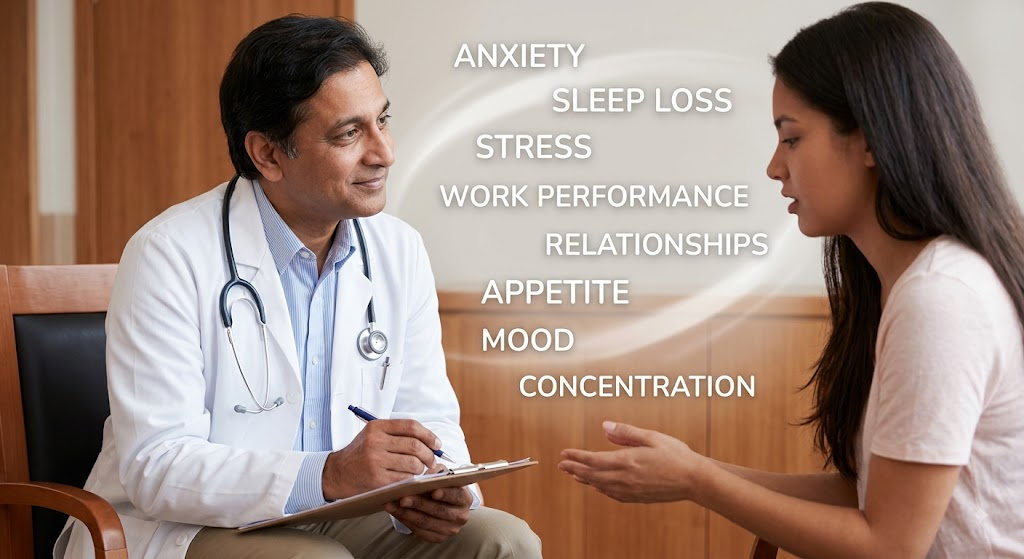
When you think of family medicine, you may primarily think of childhood immunizations, senior screenings, and the management of chronic conditions like diabetes. However, family doctors are also a first-line resource for mental health concerns, including depression, anxiety, sleep loss, and stress. Your family physician can help you determine if additional treatment is necessary while being sensitive and understanding of your situation.
Discussing mental health concerns with your primary care provider is a good idea because physical and psychological symptoms can be evaluated simultaneously
Fatigue, irritability, changes in sleep patterns, appetite, and concentration can accompany mental health conditions. In addition, physical illnesses or medications can contribute to similar symptoms, so it is essential to receive a careful assessment.
Your family doctor will know your medical history and be able to identify any changes or irregularities.
For instance, if you mention that you used to be a deep sleeper but have been having vivid, stressful dreams and waking up in the middle of the night, they will take it into consideration. You do not have to know the name of your condition or explain every detail before your doctor can begin helping you.
Patients should not try to determine if they have depression, anxiety, bipolar disorder, or another condition before visiting a doctor. Diagnosis comes after evaluating your symptoms and performing medical tests if needed, if applicable. According to CAMH, family doctors are qualified to diagnose mental health conditions, while other professionals can offer various treatments.
How To Prepare For A Conversation With Your Doctor
Preparation is key when it comes to discussions about mental health. Reflect on when your symptoms first began, what they are like now, and what changes you have noticed in your mood, eating and sleeping patterns, level of motivation, ability to concentrate, and relationships. Instead of simply stating that you have been feeling stressed lately, try to describe how this stress is affecting your life.
For example, you might say that you have been having trouble sleeping through the night, avoiding social events, and focusing at work due to persistent worry. You could mention that you have been feeling anxious most mornings for the past six weeks or have been experiencing sudden, debilitating panic attacks in certain situations. Describing the nature of your symptoms will give your doctor a better idea of what might be causing them.
You should also inform them about any relevant life changes, financial worries, grief, caregiving duties, relationship troubles, immigration concerns, health issues, chronic pain, or addictions, if applicable.
Alcohol, cannabis, other substances, vitamins, and medications can also be contributing factors and should be reviewed with a medical professional. If your regular physician is unavailable and you require non-urgent care, a visit to the walk-in clinic in Etobicoke may be beneficial in helping you understand your symptoms and receiving initial treatment. However, it is essential to remember that most mental health concerns require ongoing management and treatment, which may involve several healthcare professionals.
Patients should know that discussing mental health with a doctor is a private matter. Your physical and mental health information is personal and protected under Ontario privacy laws. However, there may be limited exceptions in specific circumstances. If you have concerns, you can ask your doctor how your information will be used and disclose only what you are comfortable sharing.
What Your Doctor Might Ask You During Your Appointment

Your first conversation about mental health is likely to be an assessment of your symptoms rather than an immediate diagnosis. A physician may ask you when your symptoms began, how frequently they occur, and whether they are improving or persisting. You can expect to answer questions about feeling sad or hopeless, experiencing loss of pleasure, worrying excessively, feeling agitated or restless, sleeping too much or too little, having changes in appetite, and difficulty concentrating.
Your doctor might ask you about panic attacks, feelings of worthlessness or guilt, traumatic events, and thoughts of self-harm or suicide. You may also be asked to describe any history of mental health concerns, treatment you have received, medications you are taking, and a family medical history if relevant. Substance use can be a risk factor for mental health concerns, so physicians may ask you directly if you are engaging in heavy drinking, illicit drug use, or frequent cannabis consumption. If needed, they might order tests to rule out other physical conditions that could be contributing to your symptoms.
Questionnaires can be helpful in assessing mental health concerns. For instance, according to CAMH, the Patient Health Questionnaire-9 or PHQ-9 is a simple self-reporting tool that helps screen for depression and monitor its severity. These are meant to support physicians in making a diagnosis rather than replacing a comprehensive medical evaluation.
Your physician might ask you direct questions about your thoughts of self-injury or suicide. This is part of assessing your level of care. If you are experiencing severe distress and believe you need emergency medical care, the Government of Canada advises seeking help immediately instead of waiting for an appointment.
Another essential aspect of your conversation will be determining your next steps. Your concerns may be manageable within primary care, or your doctor may recommend psychotherapy, specialist consultations, or other treatments. It will depend on your diagnosis, if one is needed, and the severity of your symptoms.
Treatment, Referrals, And Follow-Up Care After Your Appointment
Depending on your assessment, your physician will be able to recommend treatment, monitor your condition, or refer you to a mental health specialist for further care. As per the CAMH, family doctors can discuss mental health concerns, prescribe treatment, and refer patients to psychotherapy and other services when needed.
Psychotherapy can be an excellent option for many mental health concerns. Cognitive behavioural therapy, or CBT, is a type of talk therapy that helps you better understand your symptoms and develop coping strategies. It is often used for depression, anxiety, and several other conditions and may be short-term or ongoing, depending on your needs. The Ontario Structured Psychotherapy Program provides publicly funded, short-term CBT services for eligible Ontarians with depression, anxiety, and related concerns.
Medication can be helpful in treating certain mental health concerns, but it is not necessarily an immediate solution. According to CAMH, there are various classes of medication that may be considered, and each has its benefits and risks, which should be reviewed with a healthcare professional. Your doctor will also be able to recommend lifestyle changes that can positively impact your mental health. Following your treatment plan is essential in improving your wellbeing, as is communicating openly and honestly with your physician throughout the process.
Family physicians can play a significant role in managing mental health concerns. After an initial assessment, they may determine that your symptoms can be effectively treated within primary care or require the assistance of a specialist. Maintaining continuity of care is vital, so try to see the same doctor for follow-up appointments if possible. This way, they can track your progress, address new concerns, review medication, and monitor any changes to your mental health.
Referrals to other healthcare professionals or community resources can also be helpful when additional expertise or support is needed. The doctor can help you navigate the process and determine the most suitable services based on your diagnosis, insurance, and other factors. According to CAMH, referrals are necessary for accessing many of their specialized programs, and similar recommendations may be needed for other services.
How To Enhance Your Experience When Talking To Your Doctor About Mental Health
Be open and honest about your symptoms and feelings. Sometimes, patients neglect their mental health due to embarrassment, shame, fear of stigma, or other reasons. Remember that a doctor will be able to help you manage your concerns more effectively if they fully understand how they affect your daily life. For instance, you may need to discuss how your symptoms impact your ability to work, study, parent, engage in relationships, or care for yourself.
If you have multiple concerns, it is a good idea to mention that mental health is why you have scheduled the appointment. This way, the physician will know to spend extra time on the discussion. Patients often benefit from having a preliminary conversation with their doctor to set the tone for the interaction. As mentioned, it is always a good idea to reflect on your symptoms before the appointment. You may find it helpful to keep a journal or write down a few things you want to discuss, including your questions.
If you have multiple symptoms that you want to review, you could summarize them for the doctor instead of trying to cram everything into one visit. Discussing mental health can be emotionally taxing, so it is good to pace yourself, especially if everything cannot be resolved in one conversation. You and your doctor can always schedule follow-up appointments to review your symptoms, create a treatment plan, and monitor your progress.
Conclusion
Many of us find it challenging to discuss mental health concerns with a doctor, especially if we have never done it before. You do not need to know your diagnosis beforehand or have all your thoughts and questions neatly organized when visiting a physician. Start by talking about what you think might be happening and how it affects you. Mention what changes you have noticed or when your symptoms first began. Family physicians can help you identify the cause of your symptoms, develop a treatment plan, and potentially refer you to a mental health specialist.
Etobicoke residents who cannot reach their regular physician and require non-urgent care can always visit the walk-in clinic in Etobicoke. They will be able to review your symptoms and concerns, address any immediate medical issues, and recommend the following steps.
Mental health is a crucial part of our wellbeing, and most of us should not hesitate to seek medical advice when needed.
Frequently Asked Questions
FAQ 1: Can I talk to my family doctor about anxiety?
Yes, you can. Anxiety is a prevalent concern among patients, and there are several ways a physician can help. They may ask you to describe your symptoms, how frequently they occur, how long you have been experiencing them, what causes them if known, and how they affect your daily life.
FAQ 2: Can a family doctor diagnose depression?
A family doctor in Etobicoke can assess and diagnose depression, as they are qualified to evaluate mental health concerns. The PHQ-9 questionnaire can be used to screen for the condition, but it should not be relied on as a definitive diagnosis.
FAQ 3: What should I say when I do not know how to explain my mental health?
Start by describing the changes you believe are occurring in your brain or emotional state. You could mention things like poor sleep, loss of pleasure, persistent worry, changes in appetite, or reduced motivation and concentration. Tell your doctor when these changes began and how they are affecting your life.
FAQ 4: Will everything I tell my doctor remain confidential?
Yes, physicians are bound by Ontario privacy laws concerning personal health information. There may be exceptions in certain situations, so you can ask your doctor if you have concerns.
FAQ 5: Do I need medication if I tell my doctor I am depressed or anxious?
Not necessarily. Your doctor will be able to recommend the most appropriate course of treatment depending on your diagnosis, symptoms, medical history, and other factors. You may require psychotherapy, medication, or a combination of treatments.
FAQ 6: Can my family doctor refer me to a psychiatrist or therapist?
Yes, they can. Family physicians can recommend several mental health treatments and resources, including psychotherapy, medication, and psychiatry services, if applicable.
FAQ 7: Can a walk-in doctor help with mental health concerns?
Yes, a walk-in doctor can help assess your symptoms and discuss non-urgent concerns. However, it is always a good idea to follow up with your family physician to ensure continuity of care if medication, psychotherapy, or other treatments are required.
FAQ 8: What physical symptoms can occur alongside mental health problems?
Various physical symptoms can accompany mental health concerns, including sleep loss, appetite changes, fatigue, and difficulty concentrating. It is essential to rule out potential physical causes of these symptoms to ensure accurate treatment.
FAQ 9: Is publicly funded psychotherapy available in Ontario?
Yes, publicly funded psychotherapy services are available in Ontario for eligible residents. For instance, the Ontario Structured Psychotherapy Program offers short-term CBT services for depression, anxiety, and related concerns.
FAQ 10: When should a mental health concern be treated as urgent?
If you or someone else is in immediate danger and unable to care for themselves, do not wait to seek emergency medical assistance or psychiatric help. According to the Government of Canada,
this type of situation should always be brought to the attention of healthcare professionals right away.
This article is for informational purposes only and does not constitute individual medical advice. Mental health symptoms can vary between patients, so it is essential to speak with an appropriate medical professional about your concerns.