This guide walks you through exactly what to expect when you finally book that first visit — from finding a family doctor in Markland Wood who’s accepting new patients, to what actually happens once you’re in the exam room. By the end, you’ll know precisely what to bring, what to ask, and how to make that first appointment count.
The Problem: Ontario’s Family Doctor Shortage Has Hit Etobicoke Hard
It’s not your imagination. Ontario is in the middle of a well-documented primary care shortage, and Etobicoke — despite being one of Toronto’s larger and more established communities — hasn’t been spared. Long-time family physicians are retiring, fewer new graduates are choosing comprehensive family medicine, and existing practices are often full.
For residents of Markland Wood specifically, this creates a strange gap: it’s a well-established, family-friendly community, yet finding a family doctor in Markland Wood, Etobicoke who is currently accepting new patients can feel like searching for a parking spot on Bloor Street during rush hour.
The result? People delay care. A nagging cough becomes a two-week illness. A prescription refill becomes a walk-in clinic visit every single time, with no one who actually knows your medical history. Chronic conditions like high blood pressure or borderline blood sugar go unmonitored simply because there’s no consistent point of contact.
This is the discovery stage most Etobicoke residents are in when they start searching: I know I need a family doctor. I just don’t know where to find one, or what happens once I do.
Why Continuity of Care Actually Matters (Not Just a Buzzword)
Before we get into logistics, it’s worth pausing on why this search is worth the effort in the first place — especially if you’ve been relying on walk-in clinics for years.
A family doctor who sees you repeatedly builds a longitudinal picture of your health: your baseline blood pressure, your normal resting heart rate, your family history of diabetes or heart disease, the medication that worked for your migraines and the one that didn’t. Walk-in physicians, however skilled, are meeting you for the first time every single visit. They’re solving today’s problem — not tracking the slow-moving patterns that actually predict tomorrow’s.
For families in Markland Wood — many of whom are raising kids, managing aging parents, or juggling both — that continuity isn’t a luxury. It’s what catches a thyroid issue before it becomes exhausting fatigue, or flags an irregular heartbeat before it becomes a cardiac event.
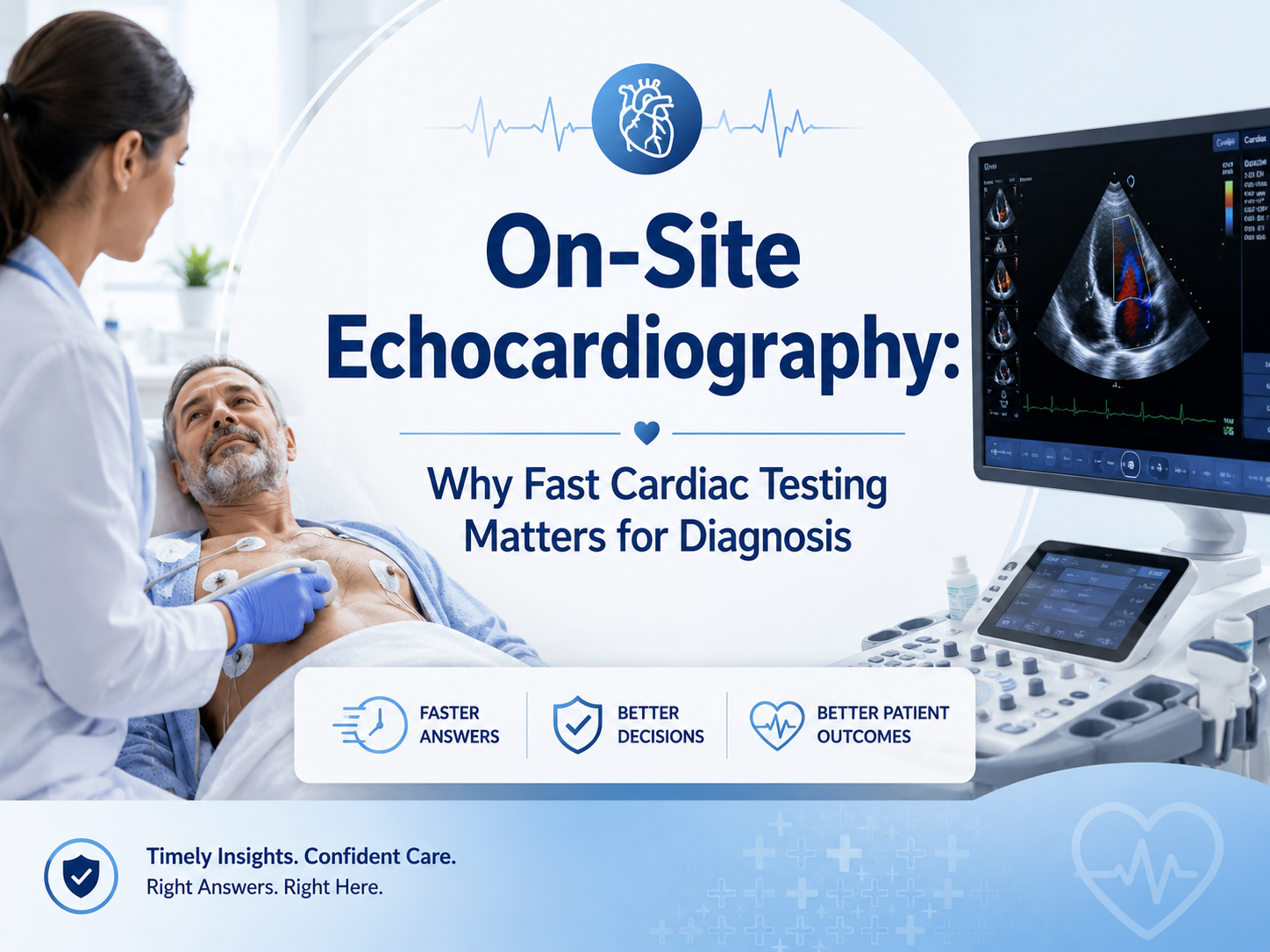
This is where a clinic like Marklandwood Medical Clinic becomes relevant to the conversation: a Bloor Street West practice that has been rooted in this exact neighbourhood for over 30 years, with a roster of family physicians and an on-site, Accreditation Canada-licensed echocardiography lab — a level of in-house cardiac diagnostic capability that’s genuinely uncommon for a community family practice in Etobicoke.
What “Accepting New Patients” Actually Looks Like Locally
Here’s where the search gets practical. In Etobicoke, “finding a family doctor” generally happens through one of three channels:
Health Care Connect — Ontario’s government-run matching service for unattached patients. It works, but wait times can stretch for months, especially in the west end.Family Health Teams (FHTs) — group practices that periodically open intake, often with waitlists of their own.Established community clinics with rostering family physicians — practices where individual doctors open their books directly, sometimes without ever appearing on a province-wide waitlist.
Marklandwood Medical Clinic falls into that third category. With multiple family physicians on staff (some actively rostering new patients, some not, depending on the month), plus a full walk-in service for anyone who needs care before they’re matched with a family doctor, it offers a practical middle ground: you’re never left with nothing while you wait for the doctor.
If you’re searching “family doctor accepting new patients Etobicoke” today, the honest answer is: call ahead. Rostering status changes monthly. But even if a specific physician’s list is closed, the walk-in side of the clinic means you’re not stuck without care in the meantime — and you can often be added to a doctor’s list the moment a spot opens.
What Happens at Your First Visit: A Step-by-Step Walkthrough
This is the part most people actually search for, and the part most clinic websites skip. Here’s what a first visit with a new family doctor in Etobicoke typically looks like, start to finish.
1. Booking and Registration
You’ll either call directly or, in some cases, be able to register online. Bring your OHIP card — this is non-negotiable in Ontario, as it’s how the visit gets billed and how your file gets created in the system. If your OHIP card is expired or you’re a newcomer without one yet, ask the clinic directly; most can still see you as a walk-in patient while your coverage is being sorted out.
2. Health History Intake
Expect a form — either paper or digital — asking about your personal medical history, family history (this matters enormously for conditions like heart disease, diabetes, and thyroid disorders), current medications, allergies, and immunization history. Take ten extra minutes here. A rushed, incomplete history is the single biggest reason first visits feel unproductive.
3. The Physical Exam and Baseline Vitals
Your first visit is rarely about solving one specific problem — it’s about establishing a baseline. Expect blood pressure, weight, and a general physical exam. If you’re over 40, or have any cardiac risk factors, don’t be surprised if your doctor discusses baseline cardiac screening, which may include an ECG or, if warranted, a referral for an echocardiogram — something Marklandwood can actually perform on-site rather than sending you elsewhere and making you wait weeks for results.
4. Discussing Ongoing Concerns
This is your moment. Bring a written list — genuinely, write it down before you arrive — of anything you’ve been putting off: that mole that’s changed shape, the fatigue that won’t quit, the family history of high cholesterol you’ve never had checked. First visits often uncover two or three issues patients had been quietly sitting on for years.
5. Setting a Follow-Up Plan
A good first visit ends with a plan, not just a chat. That might mean bloodwork requisitions, a follow-up appointment in six weeks, a referral to a specialist, or simply “come back in a year for your annual physical.” If you leave without a clear next step, ask for one.
Walk-In Care While You Wait
If you’re not yet rostered with a family doctor, Etobicoke’s walk-in clinics — including the walk-in service at Marklandwood — exist precisely for this gap. Acute issues (colds, minor infections, injuries) don’t need to wait for a family doctor match. Same-day walk-in visits handle the “right now” problems, while you work on securing longer-term, continuous care in parallel.
Why Cardiac Screening Belongs in a “Routine” First Visit
Etobicoke’s population skews toward long-time homeowners and families — which also means an older demographic profile with real cardiovascular risk. A first visit that only checks blood pressure and calls it done is missing an opportunity. Clinics with in-house diagnostic capacity, like Marklandwood’s licensed echo lab, can move from “something sounds slightly off” to a definitive answer in days, not months — without a separate referral, a separate building, and a separate wait.
Making the Decision
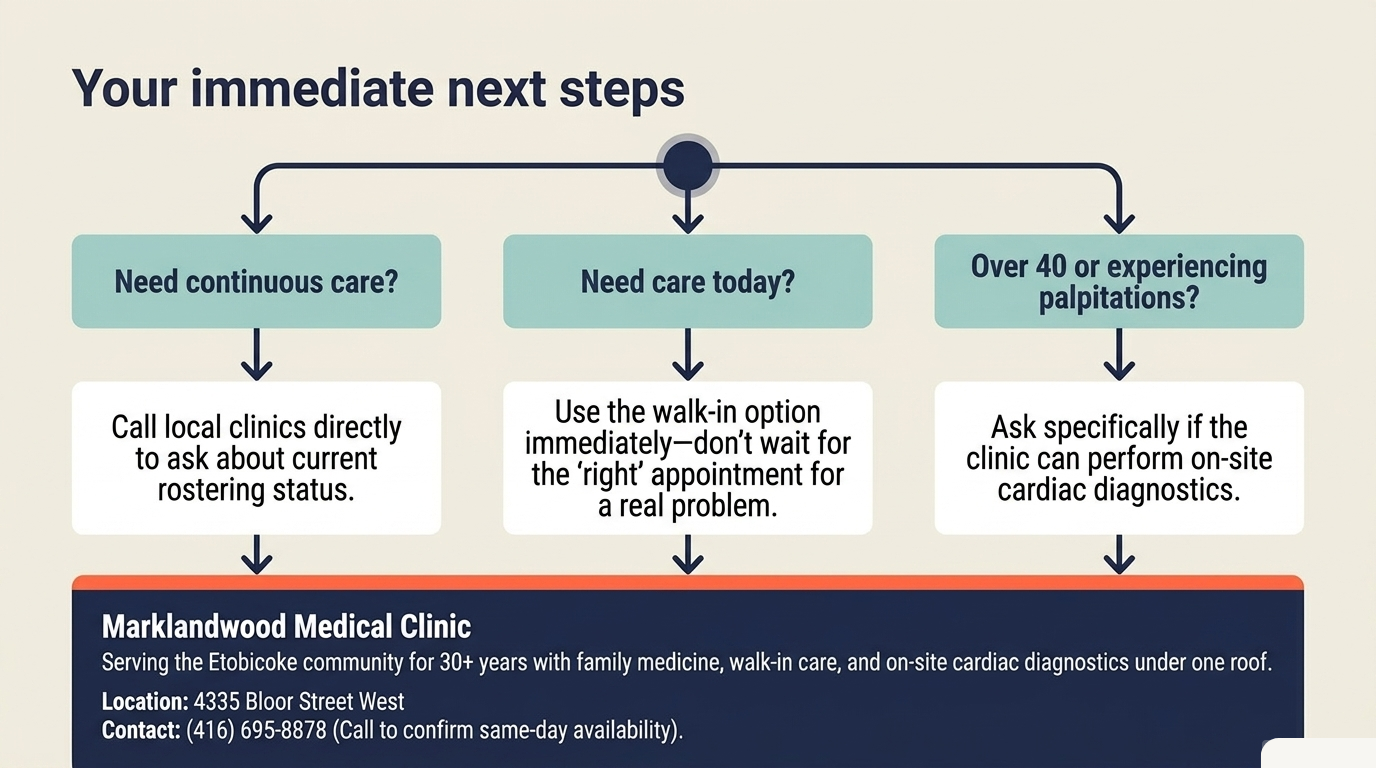
If you’ve read this far, you’re likely past the “just Googling around” stage and into “okay, where do I actually book this.” Here’s the simple version:
1. If you want a family doctor and don’t have one, call a local clinic directly (not just Health Care Connect) and ask about current rostering status.
2. If you need care today, use the walk-in option — don’t wait for the “right” appointment to address a real problem.
3. If you’re over 40, have a family history of heart disease, or have noticed symptoms like palpitations or shortness of breath, ask specifically whether the clinic can perform cardiac diagnostics on-site.