
Healthcare relationships are built over time. For a community clinic, to stay relevant for more than three decades requires more than just showing up. It requires adaptation, accessibility, prevention, and appropriate onward referral from primary care, when necessary, to diagnostics, specialist assessment, and even emergency care.
Markland Wood Medical Clinic notes that it has been providing medical services to the community of Etobicoke since 1995, which is over 30 years of dedicated care to residents. As such, the clinic asserts that its medical professionals provide both continuity with patients and accessibility to healthcare as family physicians, walk-in doctors, and prevention and management of diseases with referrals to diagnostic, cardiac, and specialist assessments when necessary.
Key Takeaways
Markland Wood Medical Clinic notes that it has been providing medical services to the community of Etobicoke since 1995.
Its care model includes family physicians with continuing care, walk-in examinations, prevention, and management of diseases alongside referrals to diagnostics and specialists.
Patients can benefit from a clinic that offers multiple levels of medical care, such as walk-in doctors, family physicians, and referrals to diagnostics and specialists, to avoid emergency care when possible.
More Than 30 Years of Community-Based Primary Care
The hallmark of any long-standing clinic lies in primary care, which includes prevention, diagnosis, treatment, continued care, and management of diseases and referrals to other healthcare providers when necessary. Family medicine builds on top of the primary care foundation by adding the aspect of relationships with patients. This care model is particularly pertinent to longer-standing clinics, where physicians get to know their patients and their medical histories.
For the residents of Etobicoke who come in for regular examinations and treatment, the personal touch of family medicine is particularly important. Many medical concerns require long-standing relationships between physicians and patients to understand the context of symptoms in the framework of the patient’s medical history, current medications, and other factors. Blood pressure, cholesterol, diabetes, thyroid function, cardiovascular disease, medication side effects, symptoms, and mental health concerns are some of the common medical concerns that require regular medical checkups to understand the context of symptoms in the context of an individual’s medical history.
Community-based primary care also has another advantage over larger hospitals in that physicians provide care in accordance to the needs of their patients throughout their lives. For instance, Markland Wood Medical Clinic notes that its physicians offer care to children, women, men, seniors, and families in the context of preventive medicine, pediatrics, health management, and chronic disease while also providing walk-in family physicians and examinations for illnesses, minor procedures, and more.
Balancing Family Medicine With Timely Walk-In Care
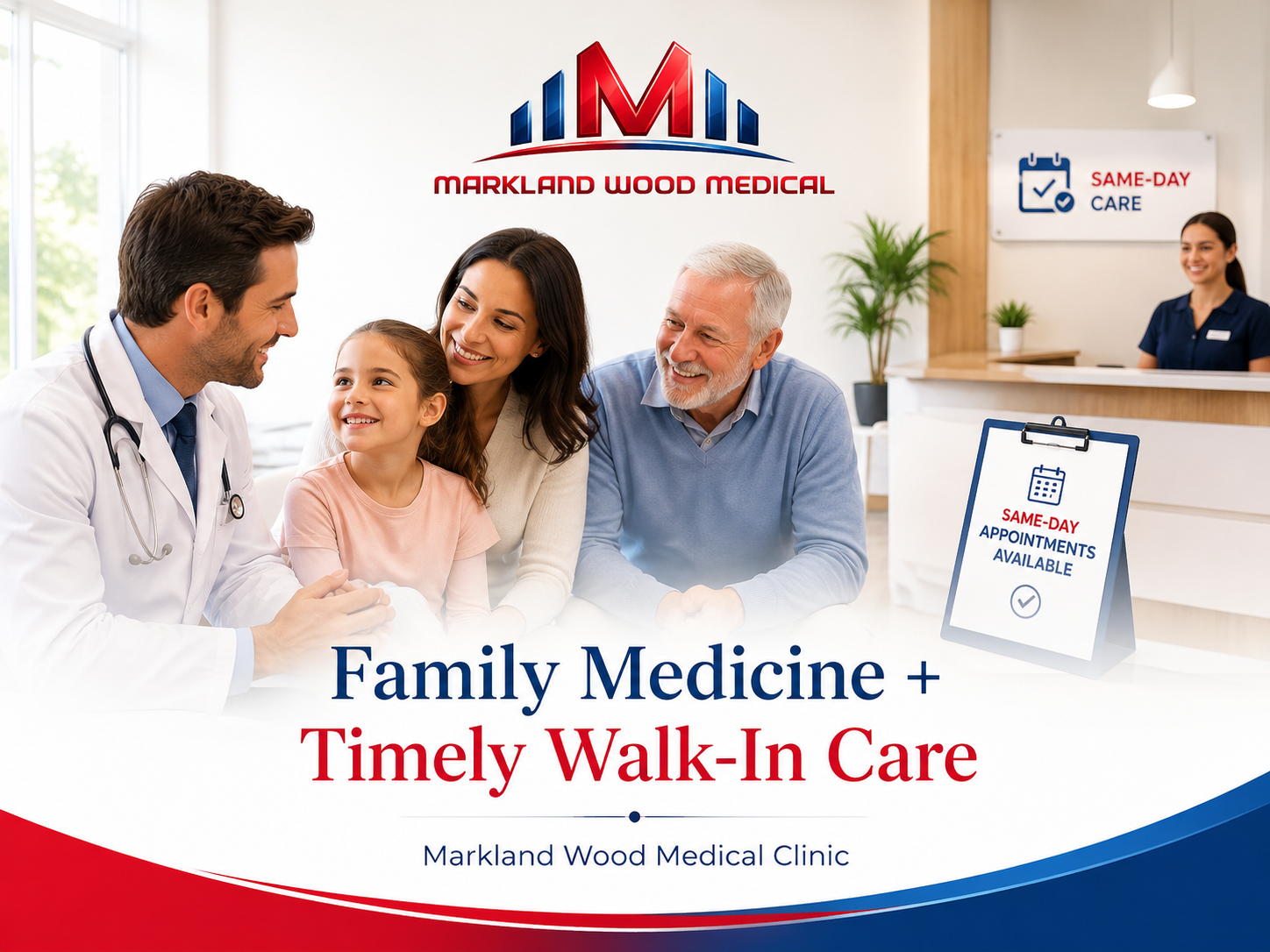
While the personal touch of family medicine is important to many patients, family physicians and nurse practitioners recognize the need for prompt assessment and treatment. In particular, many medical concerns benefit from timely evaluation and treatment. A fever, urinary tract infection, cough and cold symptoms, sore throat, minor injuries, rashes, and other concerns often require assessment and treatment. Sometimes, a pre-existing medical condition can deteriorate and require additional assessment, medications, or monitoring. In such circumstances, a walk-in clinic becomes an invaluable healthcare access point, particularly for patients who have a family doctor but cannot promptly contact them.
It is important to note that timely assessments are only appropriate for many common acute illnesses and injuries that do not require emergency interventions. By contrast, emergency departments are for life-threatening conditions such as heart attacks, difficulty breathing or chest pain, sudden loss of consciousness or stroke, major injuries and accidents, internal bleeding, and other conditions that require emergency assessment. For many illnesses and injuries that do not present with life-threatening symptoms, patients and families can benefit significantly from prompt, timely walk-in care, such as same-day examinations at an accessible local clinic.
This is particularly important for many common, acute illnesses and injuries that benefit from timely assessment and treatment but are not emergencies. In particular, patients who have family physicians can benefit tremendously from the personal touch and long-standing relationships inherent in this type of care, which provides the best care for some illnesses and injuries. Some patients, on the other hand, present with new concerns or require ongoing monitoring for a disease, such as high blood pressure or diabetes, and require prompt examination and treatment. Others can have a scheduled appointment with their family physicians but still require prompt assessment and treatment when unexpectedly ill or injured. Markland Wood Medical Clinic notes that it provides both family physicians and walk-in doctors and same-day examinations for a variety of illnesses and injuries, such as minor procedures or examinations for abdominal pain.
Prevention and Chronic Disease Management Support Long-Term Health
Many conditions, illnesses, and injuries benefit from prompt assessment and treatment. The value of family doctors and nurse practitioners also lies in the ability to prevent many diseases altogether. Preventive medicine aims to detect diseases and illnesses at an early stage to enable timely management, when required. In particular, preventative medicine encompasses a wide range of health and wellness services that detect risk factors and diseases earlier when most treatment options are available. Preventive medicine can include regular medical examinations to screen for chronic diseases such as high blood pressure, laboratory tests, immunization, cancer screening, and more, depending on individual risk factors such as age and sex, and medical history.
A family doctor can be an important asset in preventative medicine because it enables a physician to determine the most appropriate screening for an individual in accordance to their medical history. Preventative medicine is not a one-size-fits-all approach, and patients benefit significantly from the long-standing relationships with a family physician in determining appropriate screening and wellness measures. The same applies to chronic disease management, where physicians adjust treatment plans in accordance to an individual’s symptoms and health status. Chronic diseases and illnesses such as diabetes, high cholesterol, thyroid dysfunction, and hypertension are managed over extended periods, with medications and lifestyle advice in accordance to an individual’s symptoms and test results.
Diagnostic Access and Coordinated Care Help Patients Move Forward
A primary physician is in many cases a patient’s first point of contact in accessing the larger healthcare system. In particular, many symptoms require initial assessment to determine if there are indications for further investigation. Fatigue, palpitations and irregular heartbeat, shortness of breath, joint pain, abdominal pain or discomfort, and abnormal physical signs are some of the symptoms that can benefit tremendously from diagnostic investigations.
In particular, effective primary care requires prompt access to investigations when appropriate. Markland Wood Medical Clinic notes that its physicians offer cardiac investigations and services such as echocardiography and Holter monitoring. Its staff also facilitates diagnostic tests and investigations when a physician’s assessment indicates the need for further work up. Diagnostic tests are an integral component of many aspects of medicine. For example, a physician may order an X-ray or ultrasound to further assess symptoms and determine the appropriate management plan.
It is important to note that diagnostic investigations are an adjunct to a physician’s assessment. For instance, Markland Wood Medical Clinic’s website demonstrates that cardiac investigations are performed in conjunction with a physician’s assessment. Physicians may also refer patients to diagnostic investigations and specialists to coordinate further management and follow-up. This is especially important for patients who present to a walk-in clinic with new concerns. A physician may determine that further investigations or specialist assessment is necessary to determine potential causes and plan management.
Why Local Medical Clinics Continue to Matter in Etobicoke
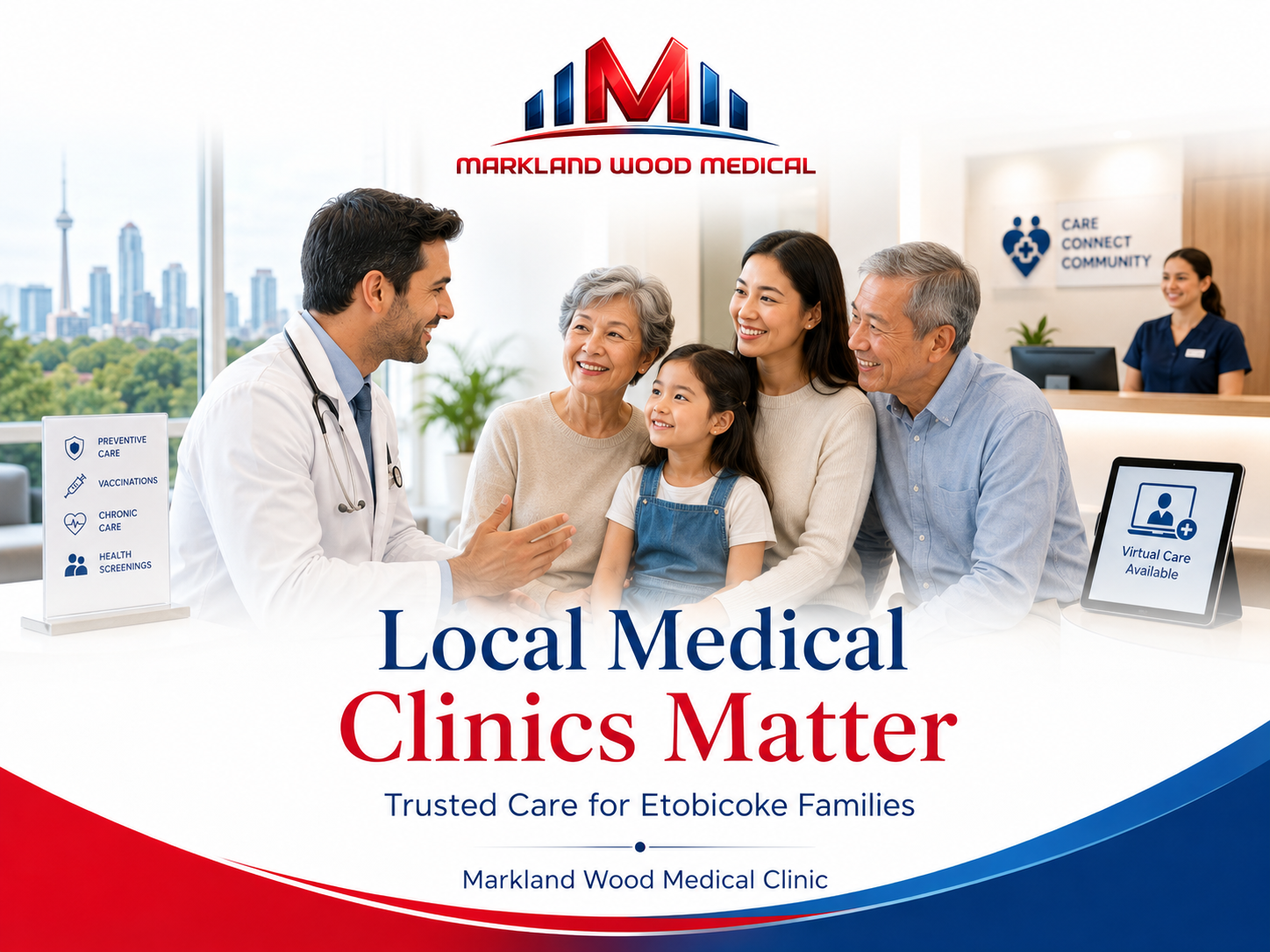
Healthcare systems have changed markedly over the past few decades since Markland Wood Medical Clinic opened its doors in 1995. Newer technologies and approaches to patient care have been implemented, such as electronic medical records, telehealth services, and more emphasis on preventative medicine. Despite these changes, the fundamental principle of a primary physician as an initial point of assessment has not changed over the years.
In particular, for Etobicoke residents seeking continued, lifelong healthcare, a local clinic provides convenience and familiarity while still being able to utilise the broader healthcare system when appropriate. A family physician does not need to provide every service directly but can facilitate referrals and investigations when necessary. In essence, physicians can determine what patients need to access the broader healthcare system and what investigations and treatments they can manage directly. Markland Wood Medical Clinic’s decades of healthcare in Etobicoke is proof positive that such a care model continues to be integral to a community.
Conclusion
To serve a community for over 30 years comes with great responsibility. Markland Wood Medical Clinic has successfully served Etobicoke residents since 1995 by providing long-standing relationships and convenient access to primary care physicians. For patients seeking prompt medical assessment or those with long-standing health concerns, a local family physician can be an invaluable asset.
As the clinic’s services demonstrate, community-based care has broad benefits for patients of all ages. Preventative medicine enables physicians to detect diseases and illnesses at an early stage, when treatment is most effective. Chronic medical conditions can be managed over time with the support of physicians. Investigation and diagnostic services are often necessary to determine the best course of action, while referrals to specialists and other healthcare services ensure that patients receive the most effective care possible.
For patients, the practical benefit of a local medical clinic that has stood the test of time is succinctly summarised in their access to community healthcare services. Residents of Etobicoke can utilise the accessibility of walk-in physicians for minor illnesses and injuries and rely on the long-standing relationships with family doctors for continued care, preventative medicine, and chronic disease management. Referrals when further investigation or treatment is indicated serve to coordinate patient care within a larger healthcare ecosystem.
Frequently Asked Questions
1. How long has Markland Wood Medical Clinic served Etobicoke?
Markland Wood Medical Clinic states that it has served Etobicoke since 1995.
2. What is the difference between a family doctor and a walk-in doctor?
Family doctors typically offer continuing healthcare, preventative screening, and chronic disease management, whereas walk-in physicians offer timely assessment and treatment for acute illnesses and injuries.
3. Why is continuity with a family physician important?
Continuity allows a physician to understand a patient’s medical history in terms of treatment, diagnostic test results, risk factors, and medications. This is particularly important for chronic disease management and preventative medicine.
4. What conditions can usually be assessed at a walk-in clinic?
Walk-in physicians typically assess common illnesses and injuries such as cough, sore throat, infection, urinary symptoms, abdominal discomfort, rash, minor injuries, and more, depending on individual circumstances.
5. When should I go to an emergency department instead?
Emergency departments are for life-threatening conditions such as heart attack, rapid breathing or inability to breathe, signs of stroke, major injuries or accidents, uncontrolled bleeding, fainting, or other similar symptoms.
6. Does Markland Wood Medical Clinic provide preventive healthcare?
The clinic offers a variety of preventive healthcare services to assess and screen for diseases and conditions, including regular medical examinations, vaccines, health screening, Pap, and HPV screening, age-appropriate cancer screening, and more.
7. Can family physicians manage chronic medical conditions?
Yes. Chronic diseases and conditions can often be managed in the context of primary care with regular follow-ups and referrals when necessary. Common chronic illnesses include high blood pressure, diabetes, and more.
8. Are cardiac investigations available through the clinic?
The clinic offers echocardiography, Holter monitoring, and other cardiac investigations. Physicians can facilitate other diagnostic investigations when necessary.
9. Can a walk-in doctor arrange further testing or specialist care?
Yes. After assessing a patient’s symptoms and medical concerns, a physician can recommend laboratory tests, imaging, cardiac investigations, specialist assessment, and other further testing.
To serve a community for over 30 years comes with great responsibility. Markland Wood Medical Clinic has successfully served Etobicoke residents since 1995 by providing long-standing relationships and convenient access to primary care physicians. For patients seeking prompt medical assessment or those with long-standing health concerns, a local family physician can be an invaluable asset.
As the clinic’s services demonstrate, community-based care has broad benefits for patients of all ages. Preventative medicine enables physicians to detect diseases and illnesses at an early stage, when treatment is most effective. Chronic medical conditions can be managed over time with the support of physicians. Investigation and diagnostic services are often necessary to determine the best course of action, while referrals to specialists and other healthcare services ensure that patients receive the most effective care possible.
For patients, the practical benefit of a local medical clinic that has stood the test of time is succinctly summarised in their access to community healthcare services. Residents of Etobicoke can utilise the accessibility of walk-in physicians for minor illnesses and injuries and rely on the long-standing relationships with family doctors for continued care, preventative medicine, and chronic disease management. Referrals when further investigation or treatment is indicated serve to coordinate patient care within a larger healthcare ecosystem.
Frequently Asked Questions
1. How long has Markland Wood Medical Clinic served Etobicoke?
Markland Wood Medical Clinic states that it has served Etobicoke since 1995.
2. What is the difference between a family doctor and a walk-in doctor?
Family doctors typically offer continuing healthcare, preventative screening, and chronic disease management, whereas walk-in physicians offer timely assessment and treatment for acute illnesses and injuries.
3. Why is continuity with a family physician important?
Continuity allows a physician to understand a patient’s medical history in terms of treatment, diagnostic test results, risk factors, and medications. This is particularly important for chronic disease management and preventative medicine.
4. What conditions can usually be assessed at a walk-in clinic?
Walk-in physicians typically assess common illnesses and injuries such as cough, sore throat, infection, urinary symptoms, abdominal discomfort, rash, minor injuries, and more, depending on individual circumstances.
5. When should I go to an emergency department instead?
Emergency departments are for life-threatening conditions such as heart attack, rapid breathing or inability to breathe, signs of stroke, major injuries or accidents, uncontrolled bleeding, fainting, or other similar symptoms.
6. Does Markland Wood Medical Clinic provide preventive healthcare?
The clinic offers a variety of preventive healthcare services to assess and screen for diseases and conditions, including regular medical examinations, vaccines, health screening, Pap, and HPV screening, age-appropriate cancer screening, and more.
7. Can family physicians manage chronic medical conditions?
Yes. Chronic diseases and conditions can often be managed in the context of primary care with regular follow-ups and referrals when necessary. Common chronic illnesses include high blood pressure, diabetes, and more.
8. Are cardiac investigations available through the clinic?
The clinic offers echocardiography, Holter monitoring, and other cardiac investigations. Physicians can facilitate other diagnostic investigations when necessary.
9. Can a walk-in doctor arrange further testing or specialist care?
Yes. After assessing a patient’s symptoms and medical concerns, a physician can recommend laboratory tests, imaging, cardiac investigations, specialist assessment, and other further testing.