
For parents, the vaccination schedule for children can be challenging to follow, especially in the first few years of life, when multiple immunization appointments are required. In Ontario, however, the recommended schedule is designed to follow a child’s developmental needs at the ages when they are most vulnerable to vaccine-preventable infections.
Vaccines are administered according to the developmental stage, the likelihood of exposure, and the need for booster doses. Some vaccines can provide protection against multiple infections, while others are given later in childhood or adolescence when immunity is most needed. Parents in Etobicoke should always refer to the standard Ontario vaccination schedule and consult with a medical professional about their child’s individual needs. Children who have fallen behind, are new to Ontario, have chronic conditions, weakened immunity, or plan to travel internationally may require a different schedule.
Important Information for Parents
The Ontario vaccination schedule recommends that children be immunized starting at approximately 2 months of age. Important vaccines are typically administered at around 2, 4, 6, 12, 15, and 18 months. Children receive booster doses between the ages of 4 and 6 years. Additional publicly funded vaccines are recommended at around Grade 7, while adolescents receive a tetanus, diphtheria and pertussis booster between 14 and 16 years of age.
As of August 2026, the province recommends that children 6 months and older receive seasonal influenza and COVID-19 vaccination according to the current recommendations for Ontario. A child falling behind on the vaccination schedule will typically not have to restart the series from the beginning. Parents of Toronto students should note that it is their responsibility to report immunization records to Toronto Public Health. Children with chronic conditions or traveling outside the country may need additional vaccines. Parents should review their child’s immunization record at every opportunity rather than waiting until school entry or when a physician’s note is required.
Health Canada and the Public Health Agency of Canada stress that childhood vaccination schedules are designed to help protect children at the ages when they are most vulnerable and to ensure that immunity is maintained through booster doses.
Why Following the Childhood Vaccination Schedule Is Important
Vaccination typically involves the administration of an antigen or other vaccine components to stimulate the development of immunity to a particular infection. When exposed to the causative agent, the child’s immune system will recognize it and mount an appropriate response, potentially reducing the severity of the infection. For more general information on vaccination, parents may want to review the overview on Wikipedia. In practice, however, it is essential to rely on the individual recommendations of a medical professional.
The timing of individual vaccines is critical, as some childhood infections can be especially severe before a child starts school. This is why some vaccines are recommended before the age of 2 years rather than later, when a child is in a daycare or a school setting. Furthermore, some infections require more than 1 dose of vaccine, as the first dose typically elicits only a partial immune response, while subsequent doses are required to boost the level of protection.
Booster doses do not mean that the initial vaccine series was ineffective. The immune response to some vaccines can simply diminish over time, particularly when a child grows older and their immune system matures. A booster dose re-exposes the immune system to the antigen, eliciting a stronger response. For parents who are unsure if their child has received all recommended doses, an appointment with a local family doctor can help review the child’s vaccination records and medical history.
Ontario Childhood Vaccination Schedule: The Basic Series
The Ontario vaccination schedule is designed to follow children throughout their development, starting from infancy. At approximately 2 months of age, babies receive their first dose of the diphtheria, tetanus, pertussis, polio, and Haemophilus influenzae type b (Hib) combination vaccine. At the same age, pneumococcal and rotavirus vaccines are also introduced. Similar immunization, including the combination diphtheria-tetanus-pertussis-polio-Hib vaccine, is typically given at 4 months. At 6 months, children receive another dose of the combination vaccine, this time without Hib.
At 12 months, the childhood vaccination schedule includes measles, mumps, and rubella (MMR) vaccine, meningococcal conjugate vaccine, and another pneumococcal vaccine. At 15 months, children receive varicella or chickenpox vaccine. At 18 months, they get another dose of the combination diphtheria-tetanus-pertussis-polio-Hib vaccine. Parents can also discuss developmental, nutritional, and other health concerns with the doctor at each immunization appointment.
Between 4 and 6 years of age, children receive a booster dose of the tetanus, diphtheria, pertussis, and polio vaccine, as well as a combined MMR and varicella booster. In Grade 7, publicly funded vaccines include meningococcal-ACYW, hepatitis B, and HPV vaccines. Adolescents typically receive another dose of the Tdap vaccine between 14 and 16 years of age.
Ontario Vaccination Schedule: At a Glance
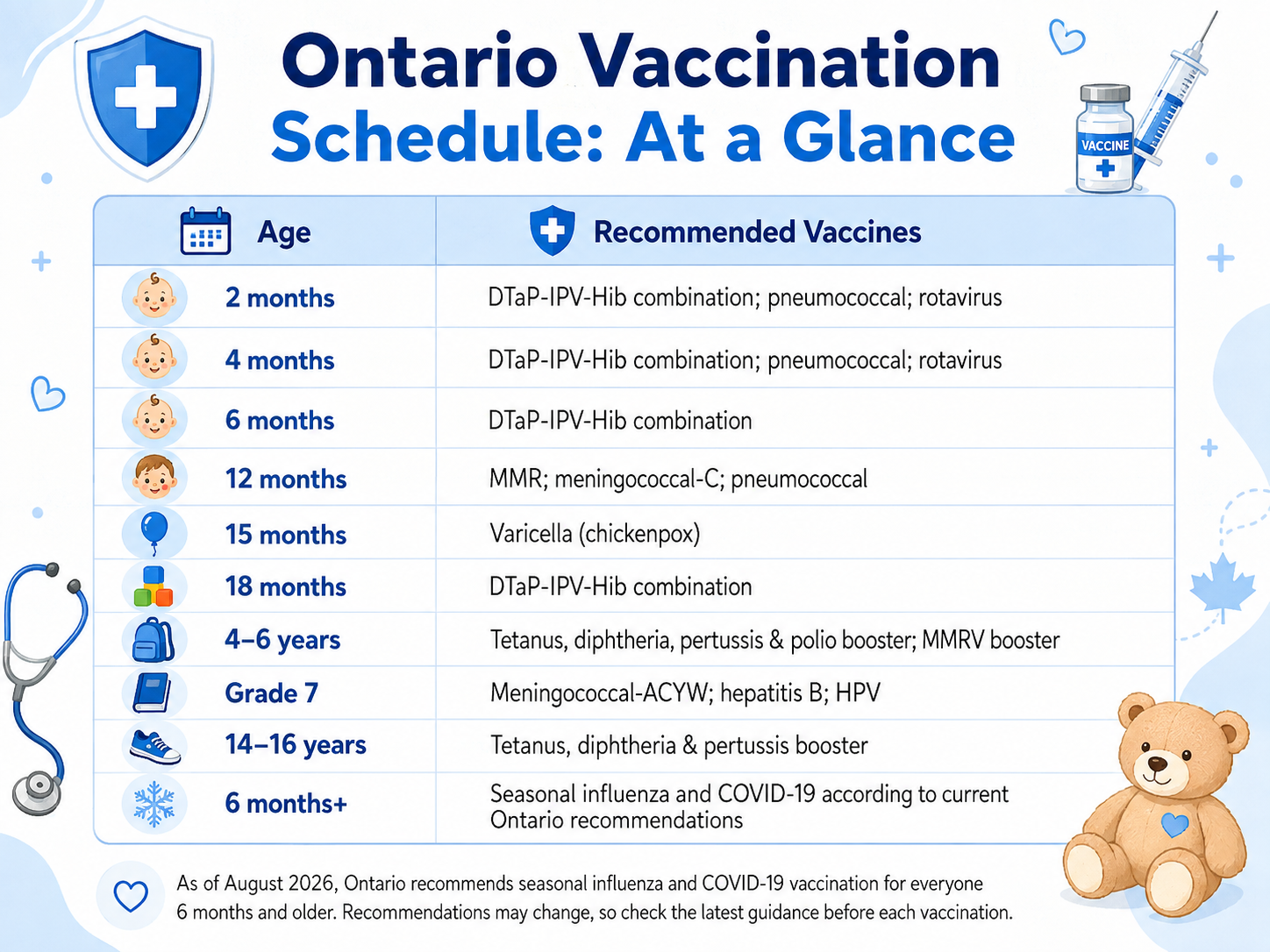
As of August 2026, the province recommends that individuals 6 months of age and older who reside in Ontario receive seasonal influenza and COVID-19 vaccination. The recommendations can change from year to year, depending on the prevalence of infections and the availability of vaccines. Parents should review the most recent information before each vaccination.
Missed Vaccines, School Entry Requirements and Catch-Up Immunization
A child who has missed a vaccination appointment will typically not need to restart the entire series. According to the Canadian Immunization Guide, interruption of an immunization series does not require restarting the series regardless of the interval between doses. The healthcare provider will review the child’s immunization records, consider the child’s age, and recommend a catch-up schedule based on the minimum intervals between doses.
This is particularly relevant for families who have moved to Etobicoke from another region or country, as childhood vaccination schedules can differ significantly between jurisdictions. Parents should bring all relevant vaccination records to the appointment, as the child’s vaccination history may need to be reconstructed. In some cases, a local walk-in clinic may be able to review the records and advise if any vaccines are due. Note that not all clinics carry all childhood vaccines, so parents may want to contact a local walk-in clinic in advance to determine the available services.
Children attending school or day-care in Ontario are entitled to a broad range of publicly funded vaccines. At the same time, the Immunization of School Pupils Act requires that students have the required documentation for specific infections or an exemption from vaccination. Toronto Public Health currently lists 9 diseases for which students are required to have documented evidence of immunization: measles, mumps, rubella, diphtheria, tetanus, polio, pertussis, meningococcal disease, and varicella for applicable students. Parents should note that not all vaccines are automatically reported to Toronto Public Health, so it is their responsibility to update immunization records with the appropriate authorities.
Preparing for Vaccination and Understanding Possible Side Effects
Before an immunization appointment, parents should bring their child’s vaccination records and provide the doctor with an update on their general health. The healthcare provider will want to know about any adverse effects following previous vaccines, allergies, prescription or over-the-counter medications, immune system disorders, and current illnesses. Children taking immunosuppressive medications or with other medical conditions may need to receive some vaccines at a later age.
A minor illness typically does not interfere with vaccination. According to the Canadian Immunization Guide, minor illnesses, with or without fever, such as uncomplicated upper respiratory tract infections or otitis media, do not increase the risk of vaccine-related adverse events or reduce the immune response to vaccination. Parents should advise the vaccination provider if the child has a moderate or severe acute illness before the appointment.
Most common side effects of routine childhood vaccination are typically mild and short-lived. Children may experience injection site soreness, redness, or swelling, fever, increased sleepiness, or temporary fussiness. These effects typically resolve on their own within a day or two. Severe allergic reactions to childhood vaccines are rare but possible, so parents should seek immediate medical attention if the child develops breathing difficulties, facial, tongue, or throat swelling, hives, or other symptoms of anaphylaxis.
Parents who are unsure about any potential side effects should contact their doctor for advice. A family physician can be especially helpful if the child has allergies, a history of adverse vaccine reactions, chronic medical conditions, or an immunization history that requires special consideration.
Special Considerations: When the Routine Schedule Might Change
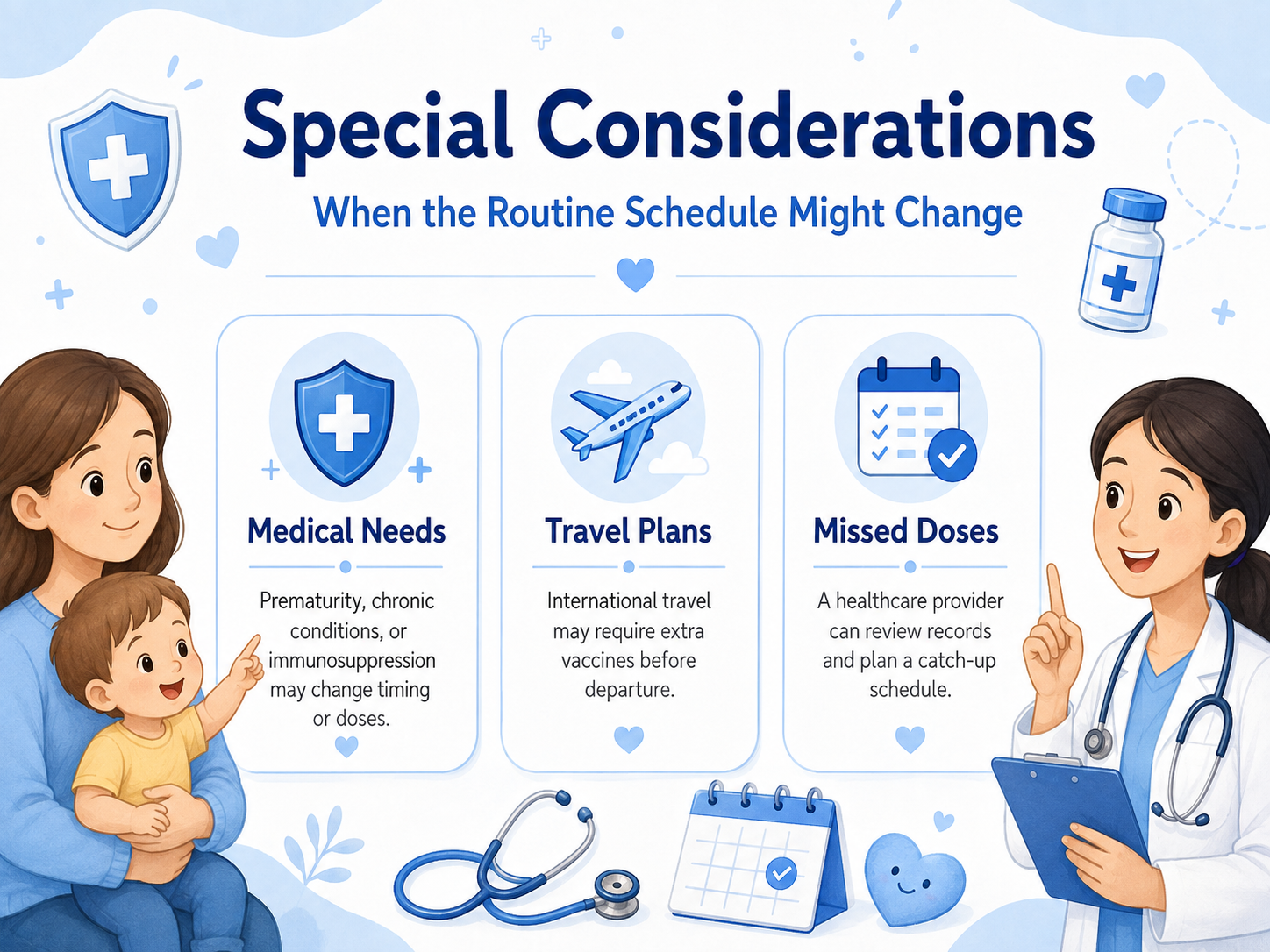
The routine Ontario vaccination schedule is typically suitable for most healthy children. Parents should be aware, however, that children born prematurely or with chronic medical conditions, immunosuppression, or those receiving certain treatments may require additional recommendations. In some cases, vaccines may need to be administered earlier, later, or in additional doses.
International travel is another consideration, as the child may be exposed to infections not typically found in Canada. Parents should always consult with a healthcare provider to review the child’s vaccination records and current immunization status at least several months before the planned departure. The provider will be able to advise what additional vaccines may be needed, depending on the destination, the length of stay, the type of accommodation, and the child’s activities.
Parents who have concerns about their child’s vaccination records or the possibility of missing doses should always consult with a healthcare provider. The doctor will be able to review the child’s immunization history and outline the catch-up schedule in detail. It is essential to rely on medical advice rather than attempting to calculate the minimum intervals between doses on one’s own. In some cases, a local walk-in clinic can also be helpful in reviewing the child’s vaccination records and determining if any doses are due.
Conclusion: Staying on Schedule Is the Best Protection for Your Child
The childhood vaccination schedule is not just a series of recommendations; it is a carefully designed program that ensures children are protected at the most vulnerable times. In Ontario, children need to receive vaccines at specific ages and intervals throughout their development, starting at around 2 months, toddlerhood, preschool, and adolescence. Parents can make the process easier by keeping track of their child’s vaccination records and reviewing them at each medical appointment. If a child is falling behind on the vaccination schedule, there is typically a catch-up pathway rather than restarting the entire series. Parents should also remember to review the most recent recommendations, particularly for seasonal vaccines such as influenza.
For families in Etobicoke, a consistent relationship with a primary care physician can help ensure that immunization needs are met while also addressing the child’s developmental and general health needs. When questions arise, it is essential to rely on the most recent recommendations rather than out-of-date information or advice from another jurisdiction.