
The first trimester runs from conception through the thirteenth week of pregnancy and establishes the physiological basis for the remainder of your pregnancy. All of the body’s organs grow and develop throughout pregnancy, which means that the first trimester is critical to your long-term health – which means that getting proper prenatal care is one of the best decisions you can make. Knowing the first trimester expectations, prenatal visits, and symptoms to prepare for can take a lot off your mind.
This guide contains everything you’ll need to know for your first trimester, including first prenatal visits, bloodwork, screenings, first trimester symptoms, and more. First trimester pregnancy planning is one of the most important ways an expecting parent in Etobicoke can prepare themselves for the months ahead.
Highlights
- Make sure to book your first prenatal appointment as soon as you receive a positive result or suspect that you may be pregnant
- Blood tests in the first trimester are used to screen for anemia and infectious diseases
- Folic acid can help prevent birth defects of the spinal cord
- A dating ultrasound can help confirm the due date of your pregnancy between 11 and 14 weeks gestation
- Many harmful foods and substances should be avoided during the first trimester
- Know what first trimester symptoms are completely normal and what symptoms should prompt an immediate trip to the emergency room
Pregnancy Tests and First Prenatal Visits
Pregnancies are typically first detected at home with a urine test that looks for the presence of human chorionic gonadotropin, or hCG, the hormone responsible for maintaining pregnancy. While home pregnancy tests are typically reliable, a quantitative serum pregnancy test at your doctor’s office can help confirm your pregnancy and estimate how far along you are based on your hormone levels.
When you receive a positive test result, it’s time to book your first prenatal appointment. First prenatal visits usually occur between eight and ten weeks gestation, but they should be booked as soon as possible after you receive a positive test result or suspect that you may be pregnant.
It’s helpful to choose a family physician in Etobicoke early on in your pregnancy so they can oversee your first trimester and arrange any further prenatal services as necessary. If you don’t already have a family doctor, you can still receive first trimester care in Etobicoke at an alternate healthcare facility. Prenatal visits in Ontario are typically made with your local family physician, but there are several other prenatal care options available to you depending on your individual circumstances.
Your first prenatal appointment can also help your doctor decide whether your pregnancy should be considered low or high-risk. It’s helpful to build a relationship with your prenatal care provider early on so that you’re both comfortable discussing your particular circumstances and how they may affect your pregnancy.
Bloodwork, Screening Tests, and Ultrasounds
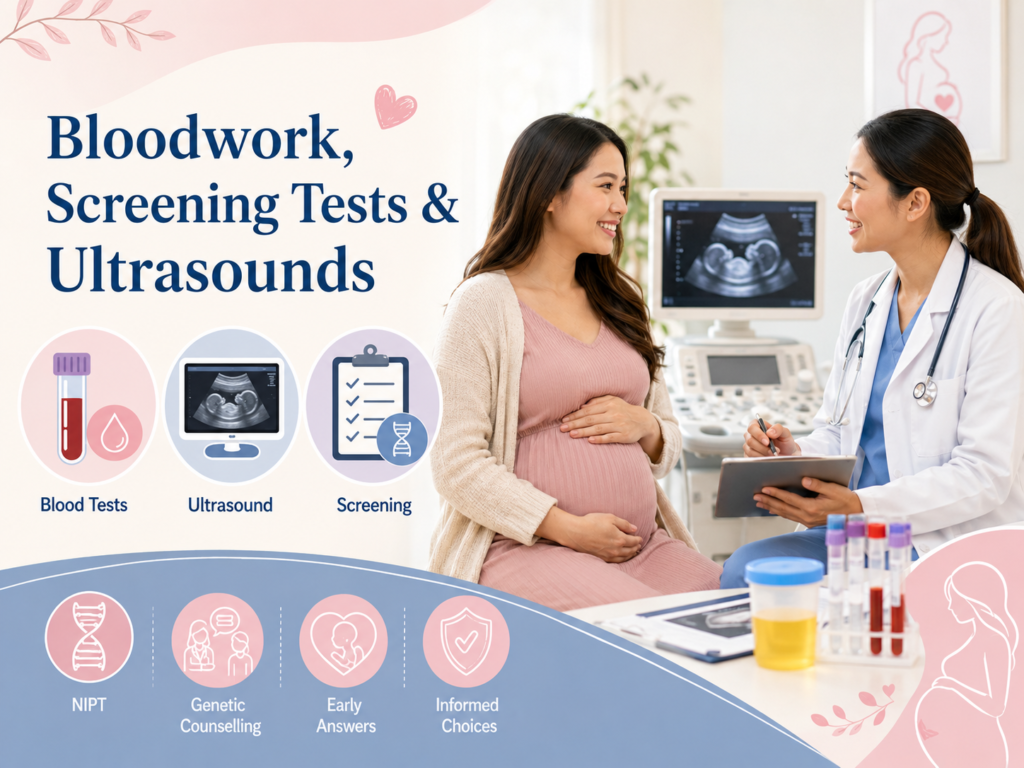
Your first prenatal blood tests are an important part of determining the health of your pregnancy. Your prenatal doctor will run a complete blood count to screen for anemia, determine your blood type, screen you for immunity to certain infections, and test you for hepatitis B, HIV, and syphilis. A urine test will also likely be performed to screen for protein and glucose in your urine, which can be an indicator of preeclampsia and gestational diabetes later in your pregnancy.
A dating ultrasound is typically done between 11 and 14 weeks gestation to confirm your due date and ensure that your pregnancy is progressing normally. Dating ultrasounds are also commonly paired with nuchal translucency testing to screen for chromosomal abnormalities in the fetus. First trimester ultrasounds are a special opportunity to see your baby for the first time!
If you want to get more information about your baby’s health, you may request additional screening tests such as NIPT (non-invasive prenatal testing). NIPT is a blood test that can analyze certain chromosomal abnormalities in your baby with higher accuracy than traditional serum screening. Genetic counselling is always an option for families who want to discuss prenatal screening, family health history, and their options in more detail and make an informed decision.
Diet, Exercise, and Other First Trimester Lifestyle Factors
Folic acid is an essential prenatal vitamin that helps to prevent neural tube defects in the fetus. It’s recommended that you take 0.4 – 1 milligrams of folic acid per day for the entirety of your pregnancy and that you begin taking it at least one month before you conceive if possible. A prenatal vitamin that also includes iron, vitamin D, and calcium is also important for supporting your body through pregnancy.
It’s especially important in the first trimester to avoid unpasturized dairy, alcohol, smoking, and secondhand smoke, while eating plenty of iron-rich foods. You should also avoid eating uncooked deli meats and seafood, as well as large predator fish like swordfish and shark, due to their high mercury content.
Eating smaller meals more frequently throughout the day and staying hydrated can help reduce morning sickness and fatigue, which are both very common in early pregnancy. Make sure that you’re also getting plenty of sleep and that you keep an eye on your caffeine consumption in the first trimester. Exercise is encouraged throughout pregnancy when done safely, which typically means avoiding contact sports and high-impact activities. Speak to your doctor about what exercises are safest based on your individual circumstances and physical fitness level.
What Symptoms Should I Expect During My First Trimester
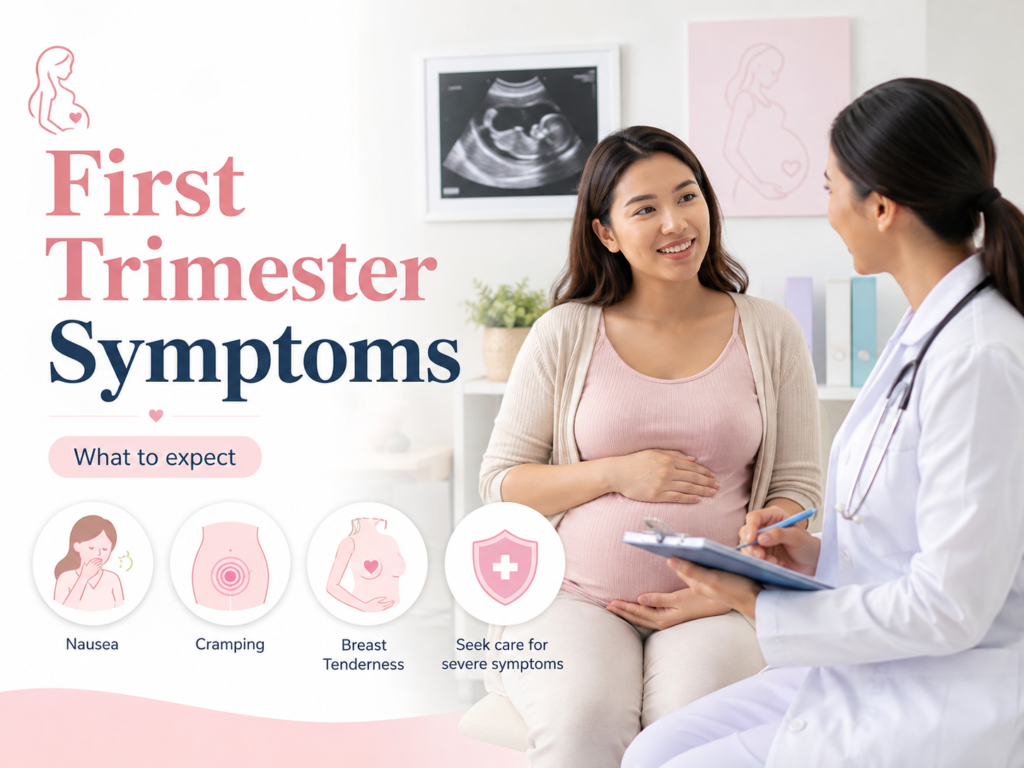
It’s completely normal to experience some level of cramping and breast tenderness in early pregnancy as your body adjusts to its new hormonal environment. Most people also find that their appetite increases throughout the first trimester – however, morning sickness can make it difficult to eat or feel nauseous throughout the day, so frequent small meals are typically most helpful.
Heavy vaginal bleeding, severe pain, fever, fainting, and sudden headaches should always be taken seriously and evaluated by a healthcare professional right away. Many first trimester complications can be resolved with prompt medical attention. If you experience first trimester bleeding or other symptoms that concern you after hours, you should always consider visiting a walk-in clinic in Etobicoke. Walk-in physicians can help assess your symptoms, order any necessary blood tests, and ensure your family doctor is kept up to date with all developments.
A strong prenatal care team is the backbone of any successful pregnancy and will help provide you with peace of mind throughout your first trimester. A great prenatal care team should include a trusted family doctor and a walk-in clinic for after-hours care and emergencies if necessary. Having reliable prenatal care nearby can be a lifesaver when unexpected issues arise and should be established as soon as possible for the wellbeing of both you and your fetus.
Conclusion
The first trimester sets the tone for the rest of your pregnancy, which is why it’s so important to know what to expect during this crucial time. Knowing what tests to expect in the first trimester and what symptoms to prepare for can put your mind at ease knowing that you’ve done everything you can to set yourself up for success in your pregnancy. Every pregnancy is unique, so be sure to speak to your family doctor about your individual situation and what steps you can take to ensure a healthy first trimester. There’s a lot that goes into pregnancy, but knowing what to expect in the first trimester can make it easier to prepare and get ready for the amazing journey ahead.
FAQs
1. When should I book my first prenatal appointment?
As soon as possible after you get a positive test result or suspect that you may be pregnant. Most people book their first prenatal appointment between 8 – 10 weeks gestation.
2. What blood tests are done in the first trimester?
Most pregnant people get a complete blood count (CBC) to screen for anemia, blood type, and immunity to rubella as well as screening for hepatitis B, HIV, and syphilis.
3. Is first trimester genetic screening mandatory?
No, genetic screening is always optional. Your prenatal doctor can speak to you about the benefits and limitations of genetic screening.
4. How much folic acid should I take in early pregnancy?
Most healthy people should be taking 0.4 – 1 milligrams of folic acid per day for the entirety of their pregnancies. Anyone with a family history of neural tube defects may need to take a higher dose, so speak to your doctor about what dose is right for you.
5. What foods and habits should I avoid in the first trimester?
Alcohol, unpasteurized dairy products, secondhand and direct tobacco smoke, high-mercury fish, and uncooked deli meats and seafood should all be avoided during the first trimester.
6. Is it normal to feel nauseated and exhausted in early pregnancy?
Yes, nausea is extremely common in the first trimester due to increased hormone levels, but frequent small meals and plenty of rest can help.
7. What first trimester symptoms require urgent medical attention?
Heavy vaginal bleeding, severe or one-sided pain, fever, fainting, and severe headaches with vision changes should never be ignored and require immediate medical attention.
8. When will I have my first ultrasound?
Most people get their first ultrasound between 11 – 14 weeks gestation, but some people may have a later ultrasound if they have additional questions or concerns. Some people also have an earlier ultrasound between 6 – 8 weeks gestation to confirm their pregnancy.
9. Can I continue exercising during the first trimester?
Exercise is encouraged throughout pregnancy when done safely, but high-impact activities and contact sports should be avoided. First trimester prenatal visits can help you discuss which activities are safest for you.
10. Should I see my family doctor or visit a walk-in clinic for pregnancy concerns?
Visiting your family doctor is best for building a strong prenatal care foundation. Walk-in clinics are appropriate for urgent concerns that come up outside of regular business hours.